Last updated November 17, 2026






Free written scope consultation - allowances, timeline, and change-order rules on paper before a single trade is scheduled
Construction Warning Signs: A Coral Gables Homeowner’s Reference Guide
A stair-step crack in an exterior concrete block wall isn’t a stucco problem. It’s a foundation movement problem wearing a stucco symptom, and homeowners who patch the stucco spend money twice. That’s the single most useful thing we can tell you about reading a house: the visible flaw is usually the last link in a chain, not the first. Coral Gables has a particular way of producing these signals. Block construction, stucco skins, high water tables, and heavy summer rain all push on the same walls at once. This guide teaches you to read the symptom, understand the system behind it, and know which signs can wait and which ones mean calling a professional now.
Quick Answer
Structural warning signs in a Coral Gables home include stair-step cracks in block walls wider than 1/4 inch, horizontal cracks, cracks that reappear after patching, white efflorescence powder that returns after cleaning, rust staining on stucco, doors or windows that suddenly stick, and driveway pavers that settle in a wave pattern. Cosmetic cracks are typically hairline, vertical, and stable over time. Anything actively changing month to month deserves an inspection before the next rainy season confirms it.
Styles & brands we work with
- Kitchen remodeling
- Bathroom remodeling
- Home additions & ADU
- Roofing
- Windows & doors
- Driveway & pavers
- Fence
Table of Contents
- How to Tell Cosmetic Cracking from Structural Cracking
- Moisture Warning Signs Specific to South Florida Construction
- Roof Warning Signs You Can See from the Ground
- Reading a Driveway for Subbase Failure vs. Surface Wear
- Why Warning Signs Compound Faster Here
- The 15-Minute Seasonal Walkaround
- When to Call a Professional
- Frequently Asked Questions
How to Tell Cosmetic Cracking from Structural Cracking
The width and direction of a crack tell you more than its length. In Coral Gables, where many homes are built of concrete block finished with stucco, cracking behaves differently than it does in wood-frame construction. Block is rigid, so when the ground under it moves, the wall doesn’t flex – it splits along the weakest path, which is usually the mortar joint.
Use this framework to sort what you’re seeing:
- Hairline crack, under 1/16 inch, vertical, and unchanged for a year: Usually stucco shrinkage or normal curing. Monitor with a pencil mark and a date written beside it.
- Stair-step crack following the mortar joints diagonally across a block wall: This pattern traces foundation movement. The wall is telling you one side of the footing has settled or heaved relative to the other.
- Horizontal crack running along a block course: Often the most serious pattern. Horizontal movement suggests lateral pressure or a footing issue. This one warrants prompt evaluation.
- Crack wider than 1/4 inch, or one that changes width over a season: Time for a structural engineer, not a stucco patch.
- Cracks radiating from the corners of door and window openings: Openings concentrate stress. Diagonal cracks at corners are a load-path signal worth reading carefully.
The test that costs nothing: photograph the crack with a ruler held against it, note the date, and repeat in three months. A crack that hasn’t moved is a cosmetic repair. A crack that has opened another millimeter is telling you the underlying process is still active. Patching it now buys you nothing, because the stucco will simply crack again along the same line. That’s the money-twice scenario, and it’s common in older Coral Gables homes where cosmetic repairs have been layered over a live structural issue for years.
One more distinction. Cracks in tile flooring, separation of tile from the slab, and diagonal cracks above door frames on interior walls all point to the same foundation question. If you’re seeing them in more than one place at once, treat it as one problem, not four.
Moisture Warning Signs Specific to South Florida Construction
Moisture here doesn’t announce itself. It works behind the stucco, inside the wall cavity, and under the slab, and the only evidence you get is what pushes out to the surface. South Florida’s construction assemblies – block walls, stucco, and slab-on-grade foundations – create specific signatures when water is present.
Efflorescence
That white, chalky powder on a wall or foundation is mineral salt carried to the surface by water moving through masonry. It’s not the wall sweating. It’s water finding a path through the wall and evaporating on the outside, leaving the salt behind. If you clean it off and it returns within a few months, the moisture source is still active. The efflorescence is the symptom, the path is the problem. This matters especially after a heavy summer, when the water table in parts of Coral Gables sits high and rain has nowhere fast to go.
Spalling
Spalling is concrete or stucco breaking away in flakes or chunks, exposing the aggregate underneath. It means the material is being pushed apart from the inside, usually by water in the wall that is expanding, contracting, or dragging salt through the pores. If you can see the block texture showing through the stucco, the outer skin has failed and the wall is no longer protecting itself.
Rust Staining
Brown streaks running down a wall, or rust blooming around window corners and under roof edges, tell you that embedded metal – reinforcing, ties, or lintels – is wet enough to be oxidizing. Rust expands as it forms, which cracks the concrete around it, which lets more water in. The rust stain on the surface is the visible end of a cavity problem you cannot see. It’s the same reason metal garage doors and steel door frames in a bathroom remodel start showing corrosion well before they fail.
What to check on a walkaround
- Look at the base of exterior walls after a hard rain – dark patches that stay damp longer than the rest of the wall mark water sitting against the foundation.
- Check for white powder lines along the bottom block course.
- Look under window sills and at the corners of stucco returns for rust thread lines.
- Feel the inside faces of exterior walls for softness or bubbling paint, which signals water traveling through.
- Note any musty smell in a closet on an exterior wall – that’s the wall cavity talking.
None of these require drilling into the wall to spot. All of them mean water is moving where it shouldn’t. Catching the path early is the difference between sealing a joint and replacing a section of block.
Roof Warning Signs You Can See from the Ground
Most roof failures are visible from the yard long before they produce a stain on the ceiling. The challenge in Coral Gables is that our roof materials take a beating from intense UV and heavy rain, so wear shows up differently than it does in drier climates. You don’t need to climb up to read the signs. Start at ground level.
What to look for from the driveway:
- Curling or lifted edges on shingles: Shingle tabs lifting at the corners mean the adhesive is failing. In our sun, this happens well before the shingle reaches the end of its service life.
- Granule loss in the gutters and at downspout outlets: A handful of dark grit after a rain is normal. Dense accumulation suggests the shingle surface is breaking down.
- Sagging along the roof line: A dip in the ridge or the eave edge suggests decking or structural movement, not just roofing wear.
- Rusted or lifted flashing at wall-to-roof junctions: Most leaks start where the roof meets a wall, a chimney, or a valley. Step back and look at those junctions with binoculars.
- Piles of sand-like grit on the ground below a tile roof: Tiles don’t normally shed grit. That loose material means the underlayment is aging out beneath them.
- Staining on soffits or fascia boards: Brown or gray streaks under the eave usually mean water running back under the edge, an early flashing problem.
The telltale roof warning is not what you see from the ground – it’s what shows up indoors. A water stain on a ceiling typically appears after the leak has been running for weeks or months, so the ceiling stain is confirmation, not the first warning. Ground-level signs give you a head start. If you’re already seeing granules and curled edges, you’re in the window where a roof inspection is cheap compared to an interior repair.
Because Coral Gables homes vary from clay tile to shingle to flat roofs, knowing the specific system matters. Our Coral Gables Construction team specifies premium roofing systems from GAF, CertainTeed, and Owens Corning depending on the roof type and the home’s needs, which means we can compare options rather than sell one product line. If your roof signs point to replacement, having real material choices changes the decision.
Reading a Driveway for Subbase Failure vs. Surface Wear
A settling driveway is either a surface problem or a foundation problem, and the difference is visible if you know the patterns. This matters more in Coral Gables than most places, because our soil is high in organic content and our water table moves dramatically between the wet season and the dry months. Both conditions can undermine a driveway that looks fine on top.
Surface-only wear looks like this: fine alligator cracking across the surface of pavers or asphalt, fading and staining, chips at the edges, and pavers that are individually loose but sitting on intact base material when tapped. The subbase underneath is doing its job. The fix is surface-level: re-sanding joints, sealing, or replacing individual units.
Subbase failure shows entirely different signals:
- Wave or trough patterns across the width of the driveway: The pavement is following settlement in the base layers below. You’ll see it as a repeating dip-and-rise where tires run.
- Pavers spreading apart at the joints in specific zones: Widening joints that run in a pattern indicate horizontal movement in the base, not just wear.
- Depressions that hold water: Ponding after a rain isn’t cosmetic. It means the base has lost volume and the surface is sagging into the void.
- Edge settlement at the street or at the garage apron: If the driveway has dropped away from the apron, the transition has failed and water is getting in at the seam.
- Rocking or bouncing pavers when you walk on them: Movement you feel underfoot means the bedding sand has washed into voids below.
Subbase failure doesn’t fix itself, and re-leveling the surface over a failed base just creates a new failure in a year or two. Our driveway & pavers work starts by assessing what’s actually under the surface before recommending anything. Belgard, Unilock, and Tremron pavers all perform well when the base is right – no paver compensates for a base that isn’t.
A practical test: pour a bucket of water on a suspicious dip and watch where it goes. If it pools and stays, the base has settled. If it drains away quickly, the surface is fine and the water is finding a joint. Small thing, but it separates the two situations better than anything else you can do in five minutes.
Why Warning Signs Compound Faster Here
South Florida’s climate doesn’t just cause construction problems – it accelerates every one of them. A crack that would take a decade to widen in a dry climate can progress noticeably within two or three wet seasons here. Understanding why changes how you triage what you find.
Three forces are at work at once:
- Water volume. Coral Gables takes a large share of its annual rain in a concentrated wet season. The ground goes from relatively dry to saturated and back every year, which heaves and settles foundations in a cycle. Every season that soil moves, your cracks move with it.
- Heat and humidity. Constant high humidity means moisture stays in wall cavities longer and rusts embedded steel faster. UV exposure breaks down roofing materials and exterior finishes quicker than they’re rated for. A sealant joint that lasts ten years up north might need attention in half that time here.
- Water table movement. When the water table rises, hydrostatic pressure pushes against foundation walls. When it drops, the soil shrinks. That’s a slow, repeated squeeze-and-release on the same walls and footings, year after year.
The cost multiplier is the part that matters. A warning sign caught early is often a repair measured in hours – resealing a joint, re-bedding a few pavers, replacing a flashing detail. The same sign left for two or three wet seasons becomes a structural repair, a stucco and block replacement, or an interior remediation. The gap between those two outcomes is wide, and it opens up quietly. That’s the real case for the seasonal walkaround: not paranoia, but arithmetic.
If you’re planning a bigger project, the same logic applies to design. When we plan a home additions & ADU project, the moisture and drainage assessment happens before the design, not after. Prefab systems from companies like Abodu, Dvele, Mighty Buildings, and Boxabl need the same footing and drainage care as a stick-built addition, and skipping the site evaluation just moves the problem into the construction schedule.
The 15-Minute Seasonal Walkaround
The most valuable habit in home maintenance is also the least technical: walk your house twice a year and look at the same things every time. You don’t need training to spot a change. You need a baseline and a routine. Do this at the start of the wet season and again when it ends.
Here’s the sequence we recommend:
- Start at the street and look up at the roof line. Check the ridge for sag, the eaves for staining, and the gutter line for granule accumulation. Take a photo from this spot each time so you can compare.
- Walk the perimeter and photograph every crack. Hold a coin or ruler to each one. Note the date. The point isn’t to judge – it’s to build a record that shows movement or stillness over time.
- Look closely at wall bases after a rain. Note dark patches, efflorescence lines, and any rust staining. Water paths show up most clearly within a day of a hard storm.
- Open and close every door and window. Any new sticking, dragging, or gap at the frame corner is a signal worth circling back to. A door that suddenly sticks is the house saying something changed.
- Walk the driveway and note any ponding. Mark dips with chalk and see whether the marks move over a season. That distinguishes surface wear from base settlement.
- Go inside and check exterior walls. Look at the base of walls, past the paint and baseboard, for dark or bubbling areas. Check the ceiling areas under the roof lines after rain.
Take photos at each step. The photo record matters more than the individual observation. When a crack stays at 1/16 inch across two dry seasons and two wet ones, you have strong evidence it’s cosmetic. When it has widened in a single wet season, you know exactly what changed and when. That’s a much more useful conversation with an inspector or engineer than “the wall looks cracked.”
See the difference
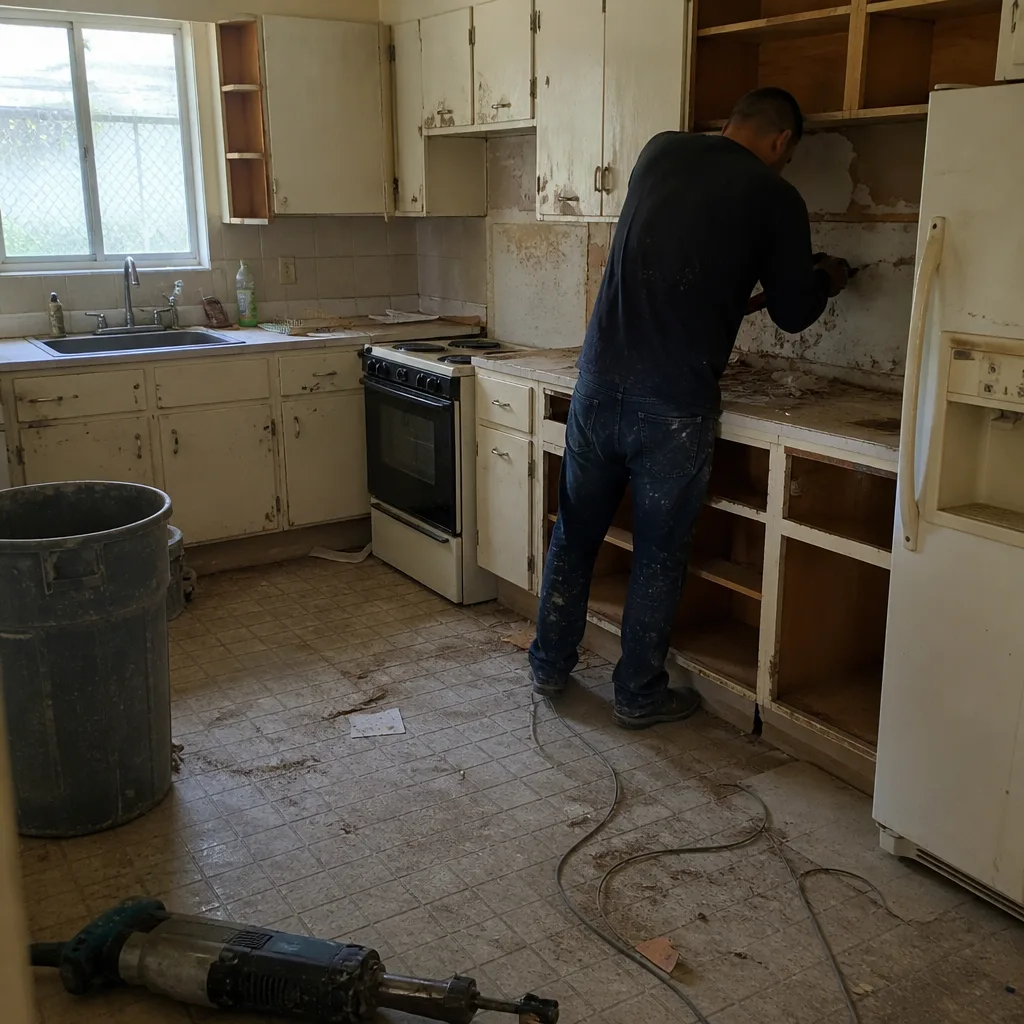 Before
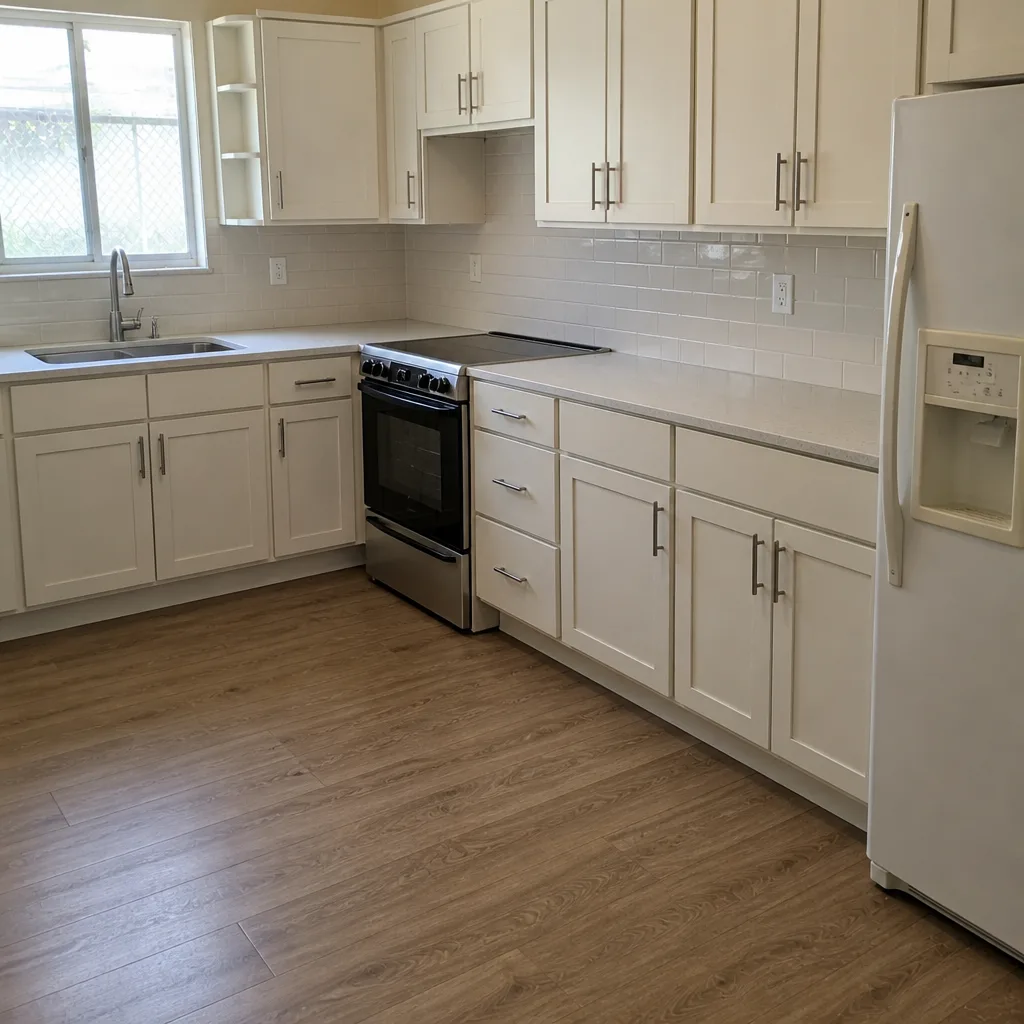 After
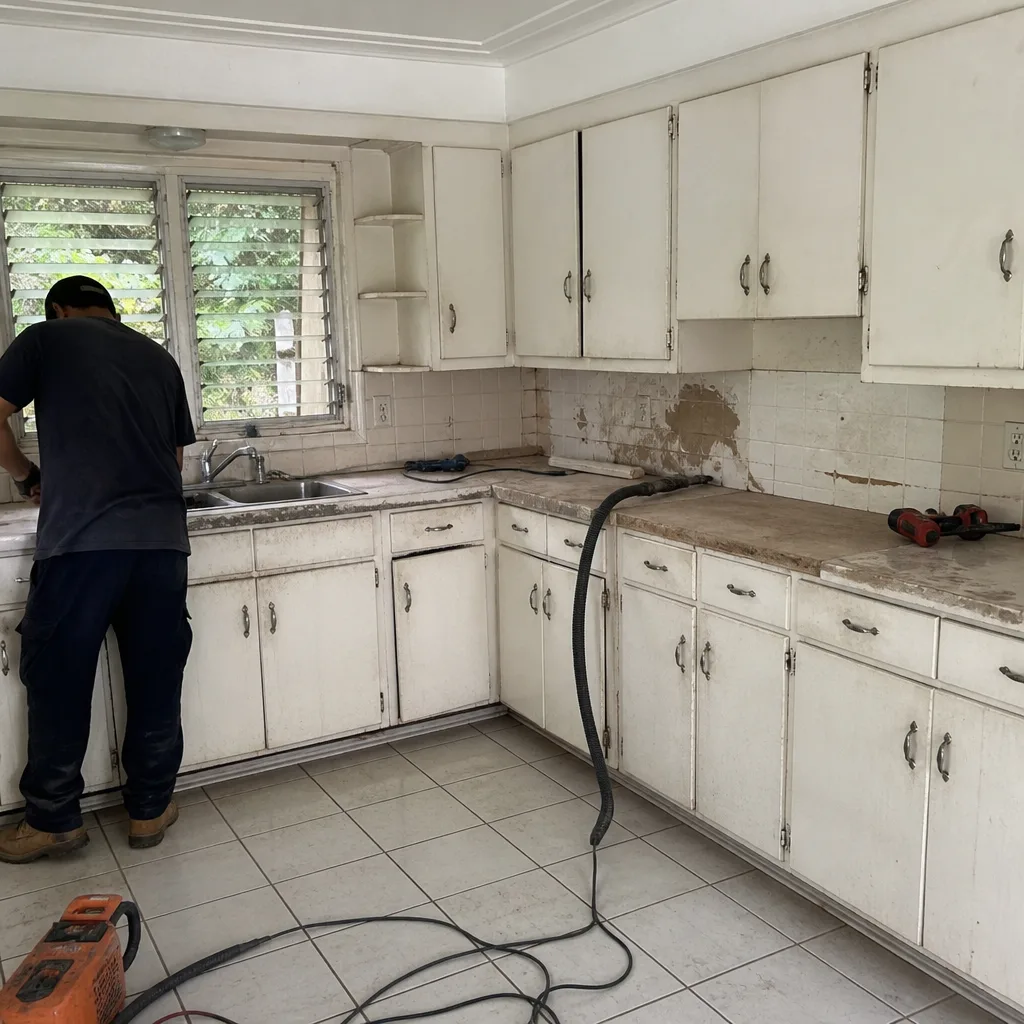 Before
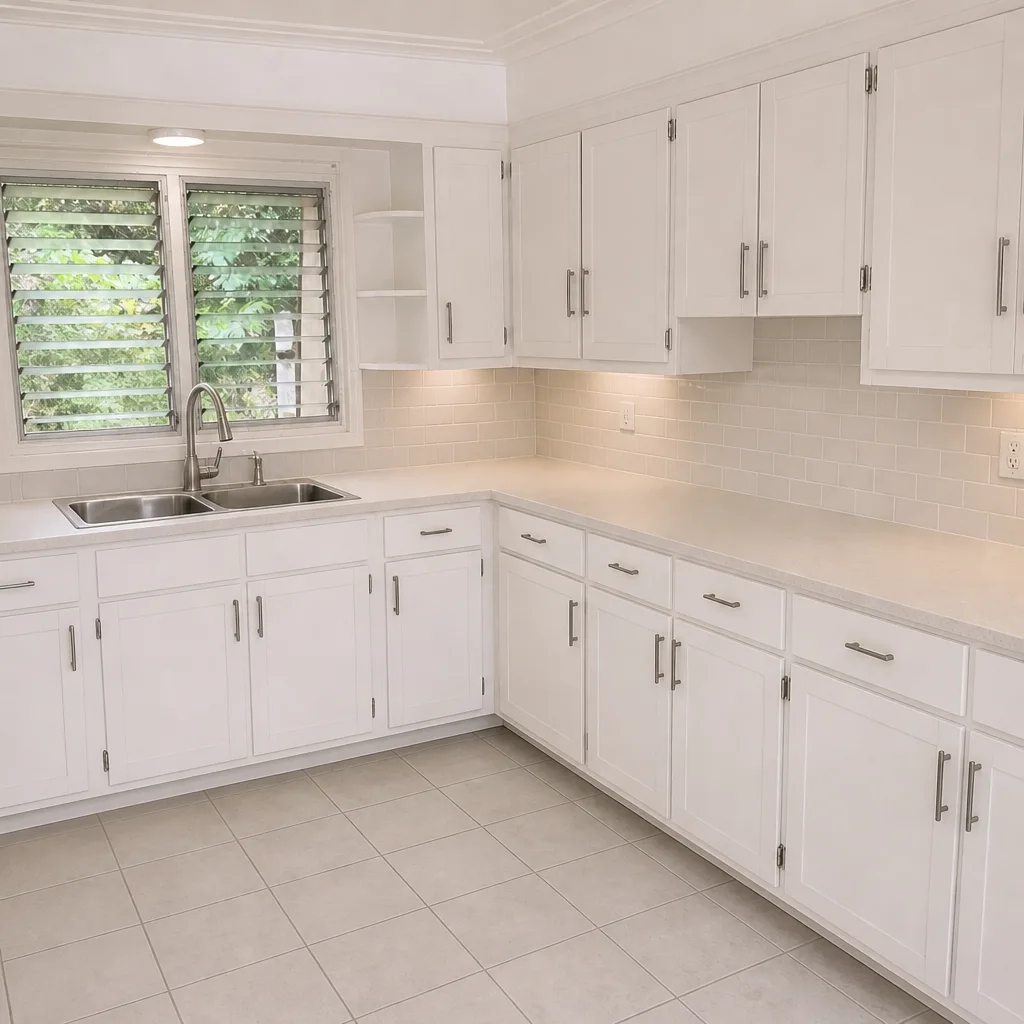 After
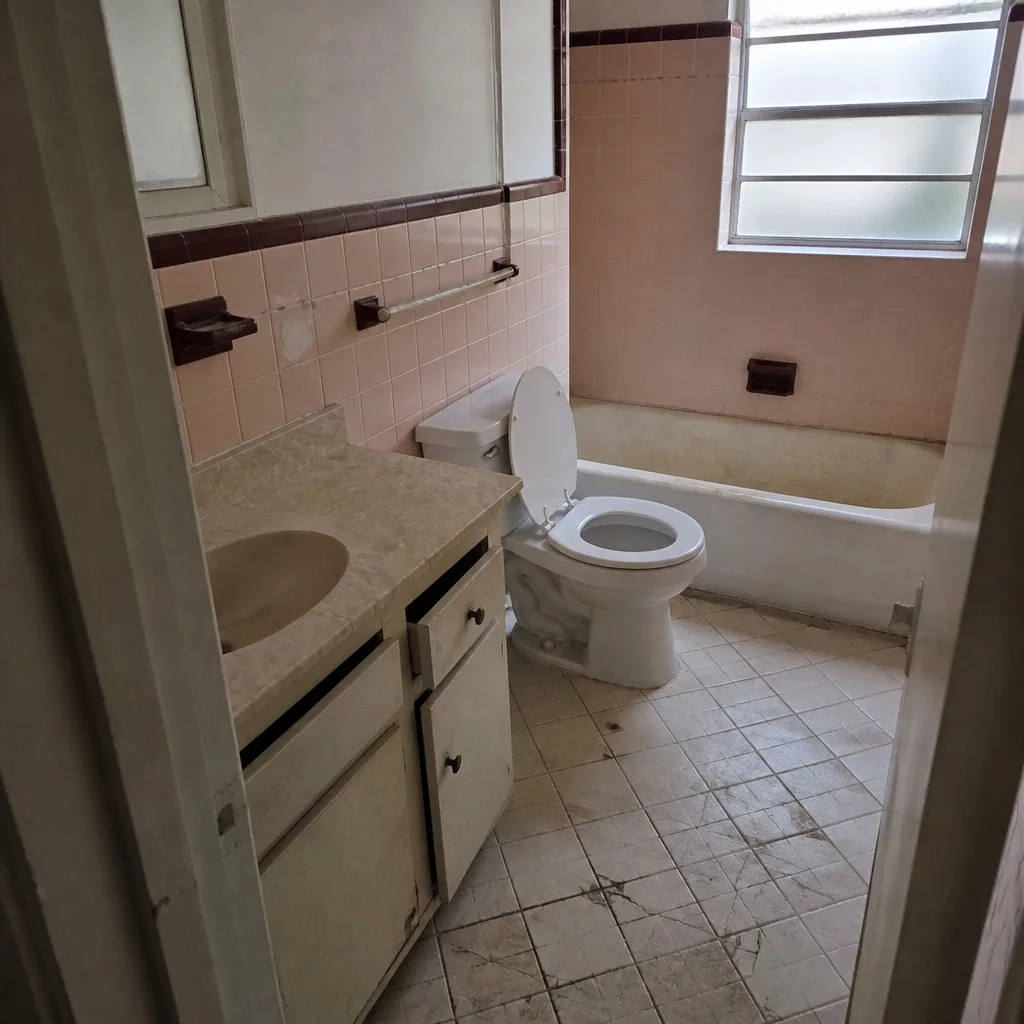 Before
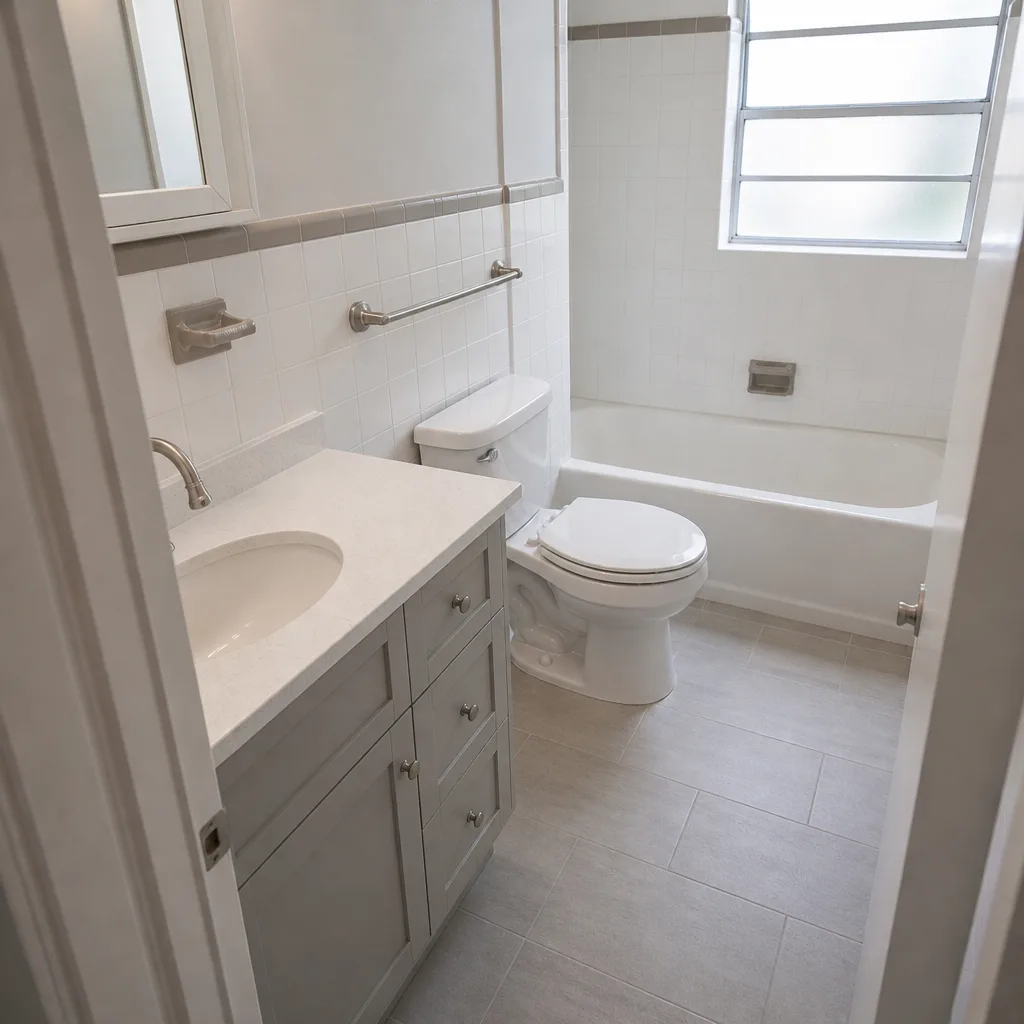 After
Common Mistakes to Avoid
- Patching stucco over an active crack. The patch hides the symptom and the underlying movement continues. The crack returns in the same place, often wider. You pay for the repair twice.
- Cleaning efflorescence without finding the moisture source. The wall looks fixed for a few months and the powder reappears. Clean it, photograph it, and then find the path the water is using before assuming it’s solved.
- Replacing individual pavers on a failing base. The new pavers settle too, because the problem is below them. Matching pavers in Coral Gables can be hard to source on short notice, so fixing the base first saves a second search later.
- Assuming a ceiling stain is a one-time leak. A ceiling stain usually means water has been traveling for a while, and sometimes through a wall cavity before showing inside. A single patch of drywall solves nothing if the roof above is still worn.
- Skipping the seasonal walkaround because the house “looks fine.” Warning signs in this climate are quiet for months and then obvious. A twice-a-year routine catches the quiet phase, which is when repairs cost least.
- Replacing a roof with no comparison of systems. Roofing choices in Coral Gables vary by system and by the home. Assuming you need the same product that’s up there now leaves money on the table and may not be the right fit for the house.
- Not pulling permits for structural or moisture repairs. Most cities here require permits for structural and major repair work. Unpermitted work shows up in resale and can cost more than the repair itself.
When to Call a Professional
Some signs are a checkup and some are a stop-what-you’re-doing. Escalate to a professional when a crack is wider than 1/4 inch, when it changes width within a season, when a wall cracks horizontally, or when more than one system shows distress at once. Rust staining and spalling on a wall with an interior musty smell is another escalation. So is roof sag, a ceiling stain that returns after a rain, and a driveway with standing water after every storm. Our technicians have up to 12 years of experience reading these patterns, and we can tell you which trade a problem belongs to before you spend money on the wrong one. Coral Gables Construction offers free estimates in Coral Gables – call (844) 797-9523.
Frequently Asked Questions
A stucco crack is serious if it is wider than 1/4 inch, follows a stair-step pattern through the block joints, runs horizontally, or widens measurably over a season. Hairline vertical cracks under 1/16 inch that stay unchanged are typically cosmetic. Photograph the crack with a ruler and date, then compare in three months. Call (844) 797-9523 for an assessment – estimates are free.
White powder on a wall is efflorescence, and it means water is moving through the masonry and evaporating on the surface, leaving mineral salts behind. If it returns after you clean it, the moisture path is still active and the wall needs a waterproofing and drainage review, not a cosmetic fix. It’s a common sight on block homes in Coral Gables after the wet season.
A door that suddenly sticks usually means the frame or the slab beneath it has moved. In block-and-stucco homes, that often traces to foundation settlement or moisture shifting the footing. Check whether the door sticks at one corner, whether the gap at the top is even, and whether any nearby cracks have changed. If more than one door in the house is doing it, get it looked at. Call (844) 797-9523 for a free estimate.
A sagging driveway may be a subbase problem or a sign that the ground beneath the driveway is failing. If the dip holds water, if pavers are spreading apart in a pattern, or if the surface is wavy across the width, the base has likely settled. Fresh pavers over a failed base won’t hold. Our driveway & pavers work begins with a base evaluation, and we use pavers from Belgard, Unilock, and Tremron to match the project.
Warning signs in South Florida progress faster than in drier climates because rain concentration, humidity, and water table movement all work on the same structure at once. A crack or drainage issue that stays quiet for years in a dry climate can move within two or three wet seasons here. The practical takeaway is to check twice a year and act on anything that’s changed.
Most warning signs cross trade lines, which is why we handle seven categories under one roof: driveway & pavers, fence installation, home additions & ADU, bathroom remodeling, windows & doors, roofing, and kitchen remodeling. That means one coordination point when a moisture problem touches stucco, a roof, and a window opening. Call (844) 797-9523 to schedule a free estimate – we answer 24/7. Fast dispatch from 7am to 7pm, Sunday through Friday.
The Bottom Line
Read the system, not the symptom. A stair-step crack, a white powder line, a sticking door, and a ponding driveway are not four cosmetic faults – they’re four outputs of the same forces: water, heat, and soil movement, all acting on a block-and-stucco house in a climate that increases the pressure each year. The homeowner who photographs and compares twice a year catches problems in the cheap phase. The one who patches and waits meets them in the expensive phase. Neither is a matter of luck. If you want a professional read on what your house is telling you, remember we connect Coral Gables homeowners with independent local professionals across every trade – one contractor, every trade, from the driveway to the roofline – and the estimate is free.
Call (844) 797-9523 for a free estimate. We answer 24/7. Fast dispatch from 7am to 7pm, Sunday through Friday.
Written by the team at Coral Gables Construction.